


Today marks one year since the end of the Assad regime in Syria, ending a 14-year civil war. While this was cause for hope and celebration, the challenges remain substantial and both economic recovery and reconstruction are hindered by residual sanctions and severe economic crisis.
This has left the health system severely underfunded and bearing the weight of many years of conflict – limited supplies, broken or outdated equipment, and medical professionals leaving the country.
Key challenges
Hospitals are facing serious shortages. Many have no qualified medical specialists in the building and depend on very junior medical residents or technicians who are not trained for complex cases. Nursing levels are very low, especially in emergency units and intensive care units. Some orthopaedic surgeries cannot be done because implants such as hip, knee, or shoulder replacements simply do not exist.
Additionally, emergency units struggle with overcrowding, no triage system, and limited space. And while there are many junior doctors, most do not receive proper supervision or structured learning. UK-Med is trying to fill these gaps by offering mentorship, joint clinical work, and targeted equipment support.
How is UK-Med supporting?
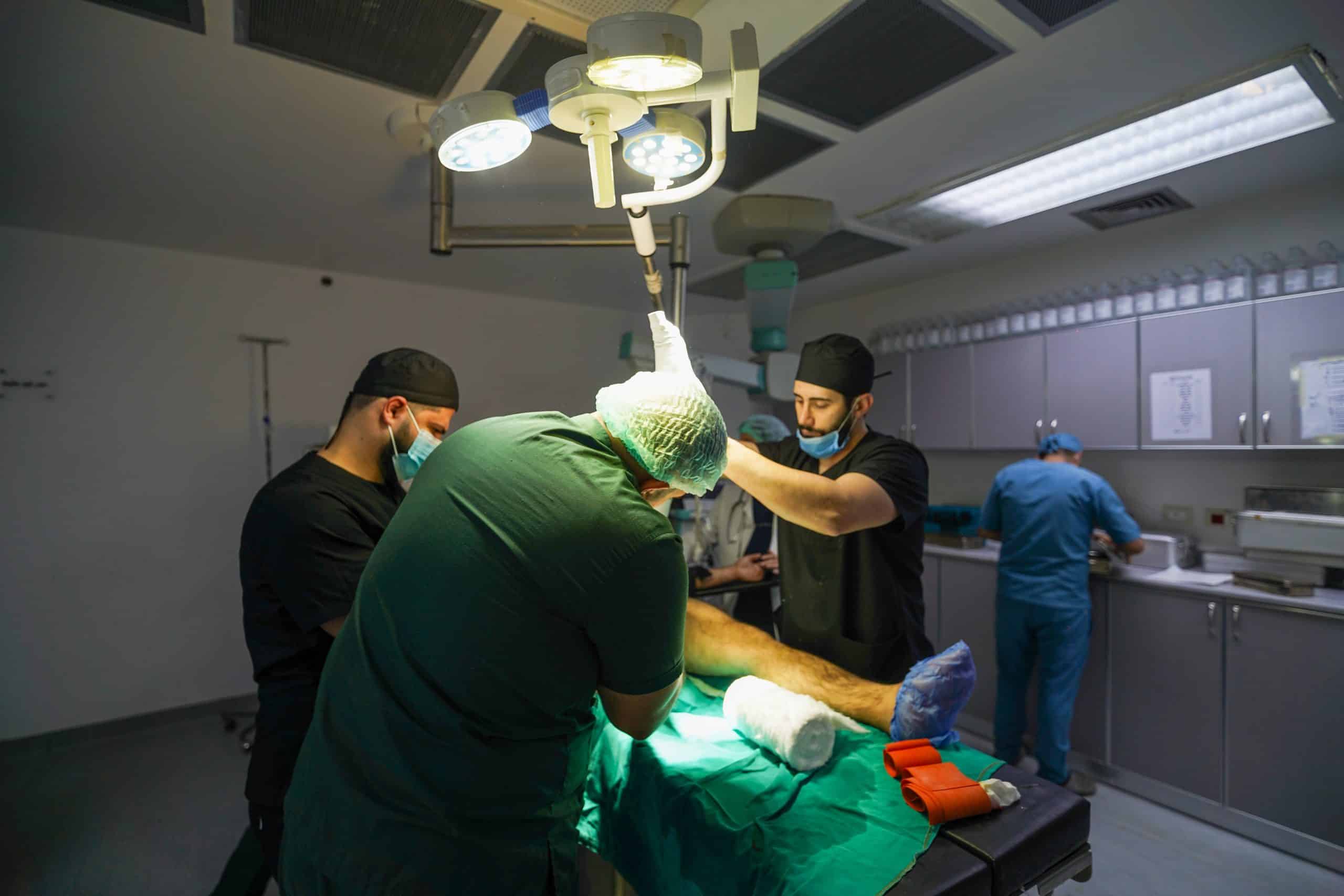
UK-Med’s pilot programme in Syria seeks to support public hospitals and establish key needs within the health system. Our focus is on strengthening emergency care, anaesthesia, and day-to-day clinical practice by working directly with doctors, nurses, and technicians. This is to improve patient outcomes, build skills in a practical way, and support hospitals that are under enormous pressure.
Even in the opening weeks, the presence of the team has sparked small but meaningful changes in how care is delivered. These early improvements suggest that once the full clinical programme begins, noticeable progress in safety, quality of care, and surgical capacity can be expected.
UK-Med Team Lead, Andres Gonzalez, recalls a moment that stuck out for him so far:
“An elderly woman arrived at the hospital with a painfully dislocated shoulder. In the past, this type of injury would have been treated without anaesthesia, meaning the patient would endure enormous pain during the procedure to relocate the joint.
When she arrived, a UK-Med anaesthetist happened to be present. Instead of following the usual practice, he carried out a short, safe anaesthetic intervention before the shoulder was put back in place. The woman didn’t suffer at all.
Hospital teams have welcomed the guidance, asked for training such as intermediate life support, and embraced the practical discussions taking place in the operating theatre. Anaesthetic residents and technicians, in particular, have been very receptive to learning through real cases and shared clinical decision-making.”

Working in partnership
Our team works mainly with the Ministry of Health’s Directorate of Rural Damascus and the leadership of Qatana Hospital. Collaboration happens through joint assessments, discussions with senior doctors and nurses, and walking through departments together to identify real needs. Every intervention is designed hand–in–hand with local staff to make sure it fits the reality of daily work.
Junior doctors benefit from day-to-day mentoring, while senior staff help shape a more structured and sustainable approach to care. The goal is to strengthen the existing workforce, not replace it.
Health is a basic right, and every Syrian deserves access to safe, dignified care. The country still has talented professionals, a strong medical tradition, and the core infrastructure needed to serve its communities. What is missing is the support that allows these strengths to shine.
With the right help, given respectfully and in partnership, Syrian hospitals can recover faster than many people imagine. They don’t need others to take over; they only need the tools, training, and reinforcement that allow them to stand on their own again.
