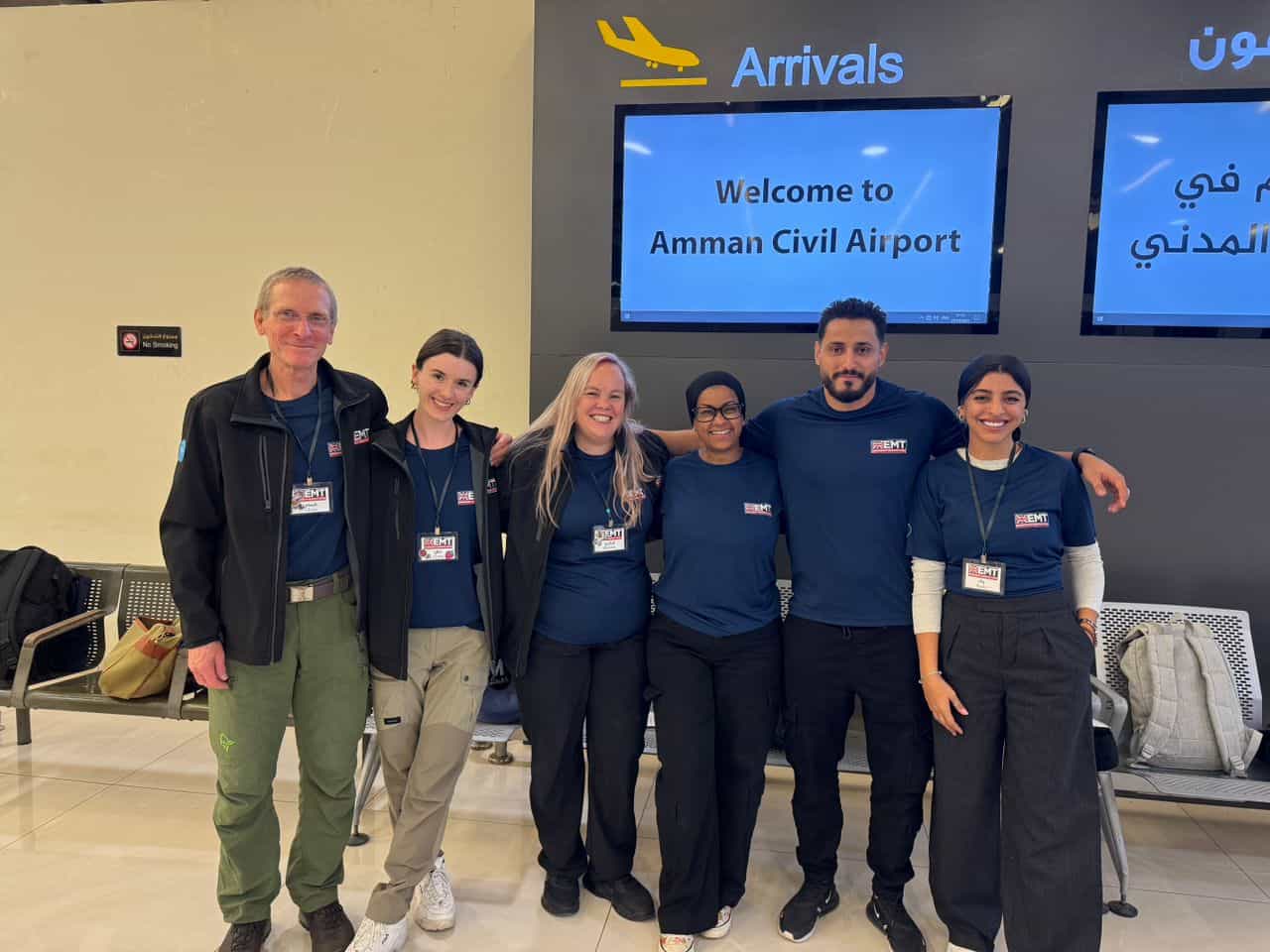

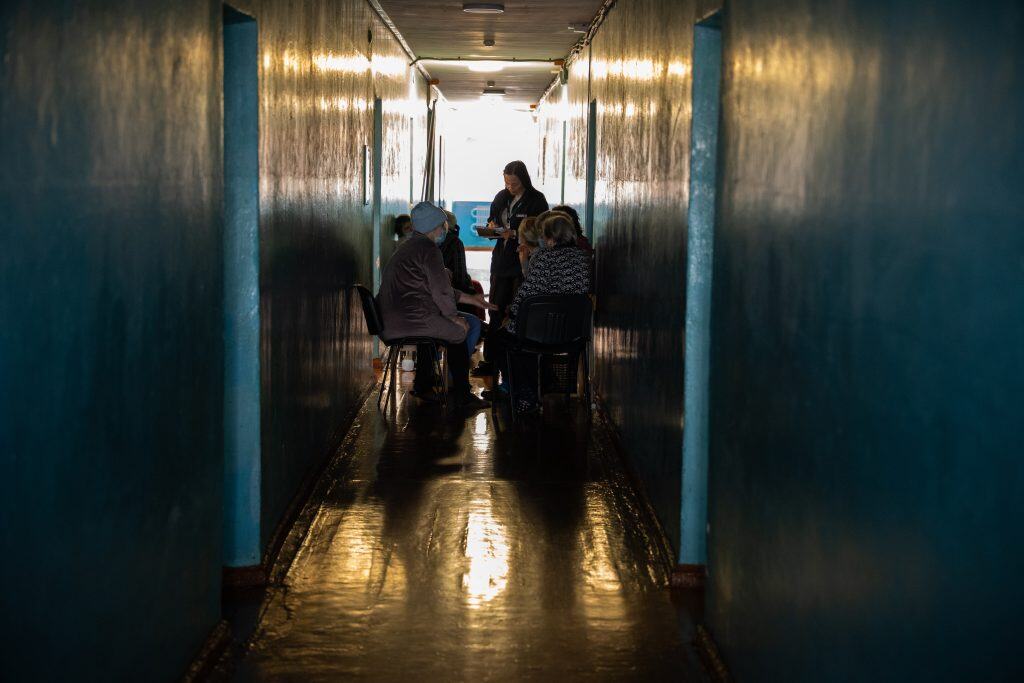
It is the middle of winter, an icy cold day in February. A UK-Med mobile medical team arrives at the collective centre in Lubotyn, eastern Ukraine. Located in an old dormitory building, which used to house rail workers, now a home for people who have been forced to flee the continued violence in their towns and villages
The strikes are not easing up. Remote communities have nowhere else to go. Not knowing when or if they will ever return. People living in collective centres are in a constant state of worry; about their homes, about their families, about their future.
UK-Med is committed to ensure these communities receive health care and medicine they desperately need or simply providing space to discuss their daily troubles – one less thing to worry about, at the very least.
Yulia, Anna, Ivan and Eveniya arrive to a line of patients, already assembled down a dimly lit corridor. This team – doctor, nurse, mental health support officer and community health worker – visit fortnightly.
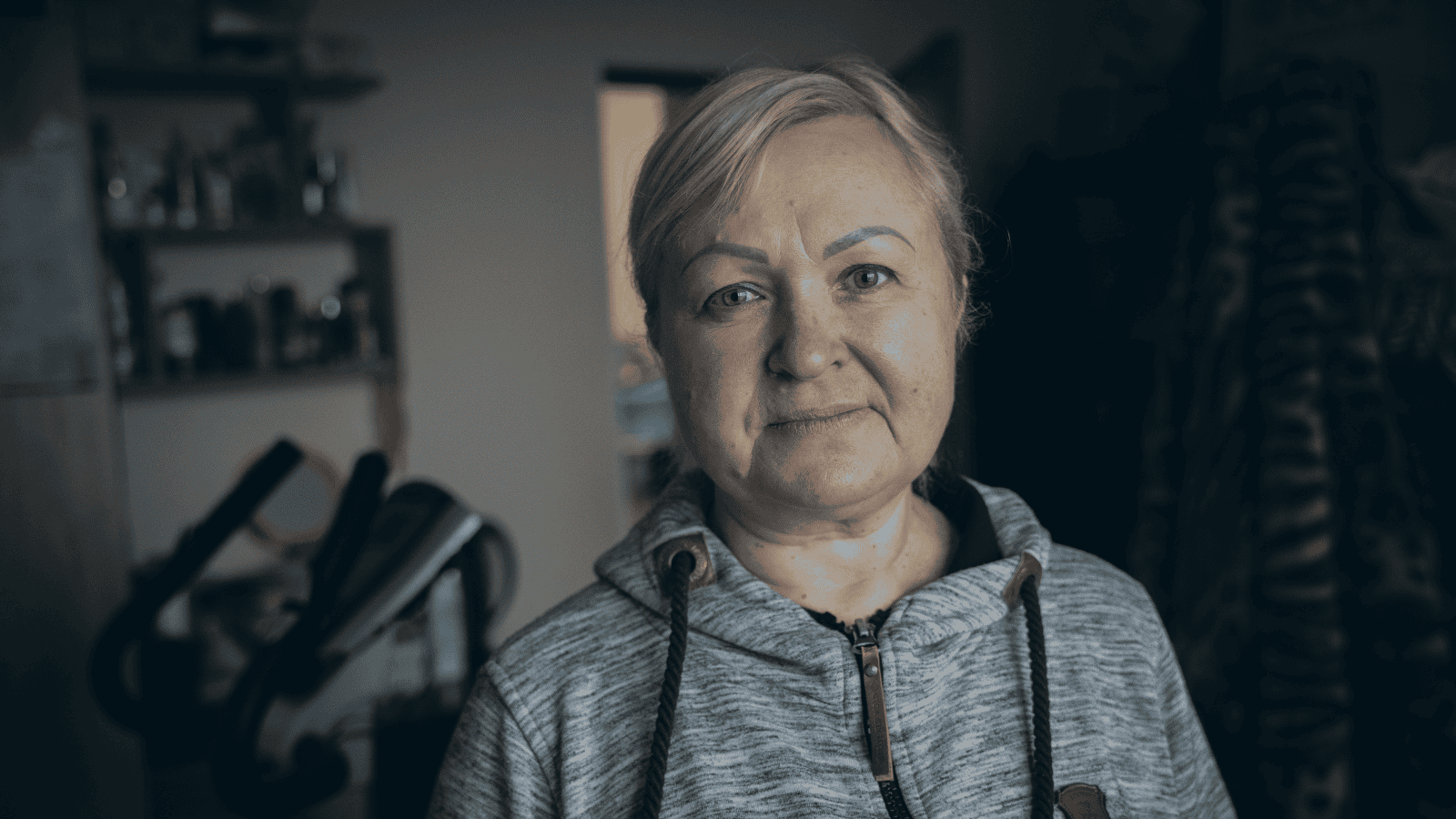
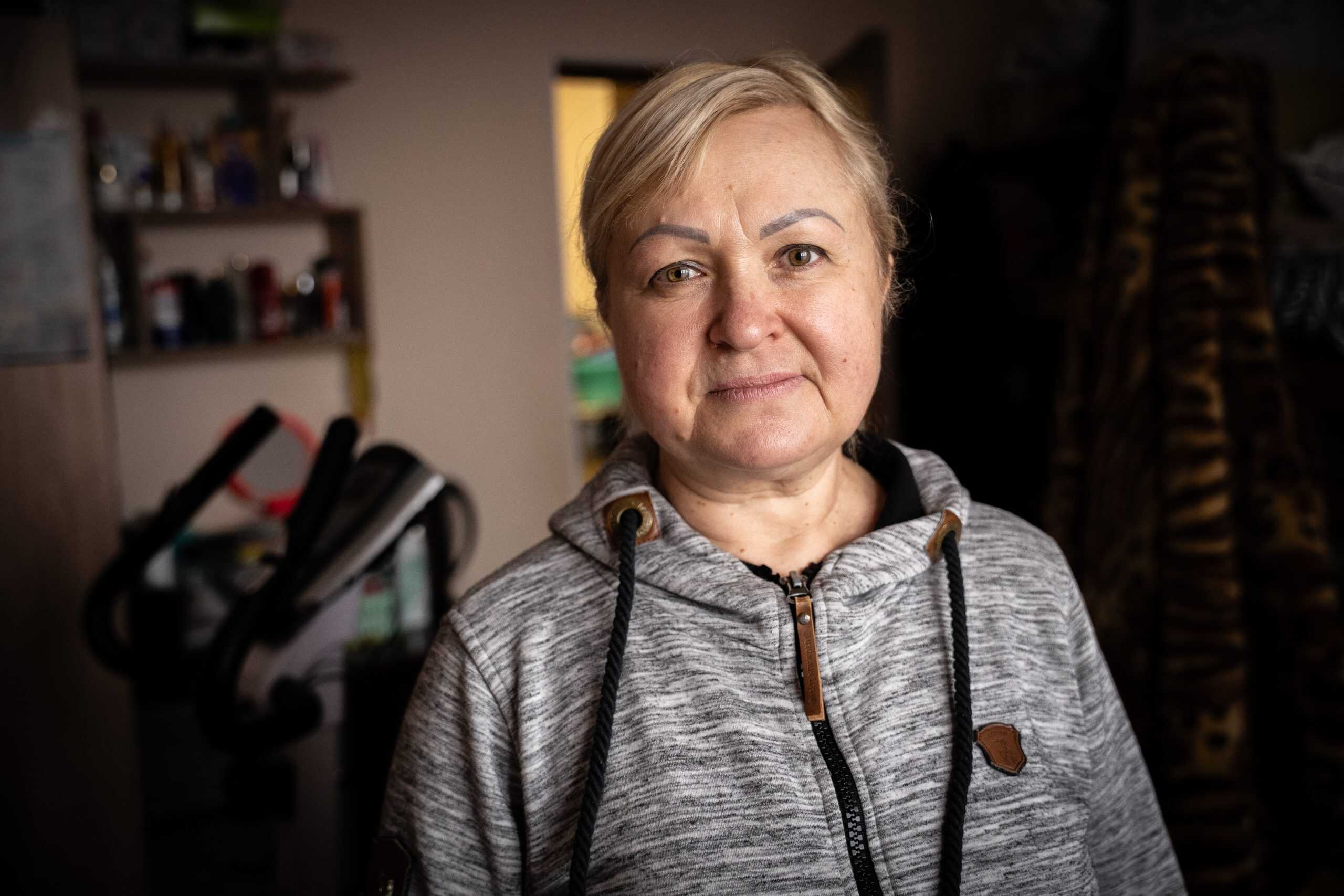
Vita, with blond hair tied back and a smile on her face, is waiting to see a doctor. She has been living in the collective centre with her extended family for three long years. They survived the Russian occupation of their homes, only fleeing when the constant threat of drones and artillery fire became too much to bear.
Vita welcomes the mobile medical team into her now home; three small rooms, four generations. Two little girls are playing with cuddly toys, giggling and intrigued. She looks after her ten-year-old granddaughter who goes to school online, now unable to attend in person like so many other children in Ukraine.
The tiny apartment is filled with personal belongings; memories from a previous life.
Her daughter’s room has bunk beds and a desk where her granddaughter sits next to their two birds, Kesha and Kizzi, gently squawking in the background. Vita’s mother, now eighty years old, is living with a neurological condition which meant she recently had to leave for hospital, but her room is still made up, with plants lining her window and a patterned quilt waiting for her return. The space feels cosy, and you can see the effort to create a sense of home – despite the cramped, temporary conditions.
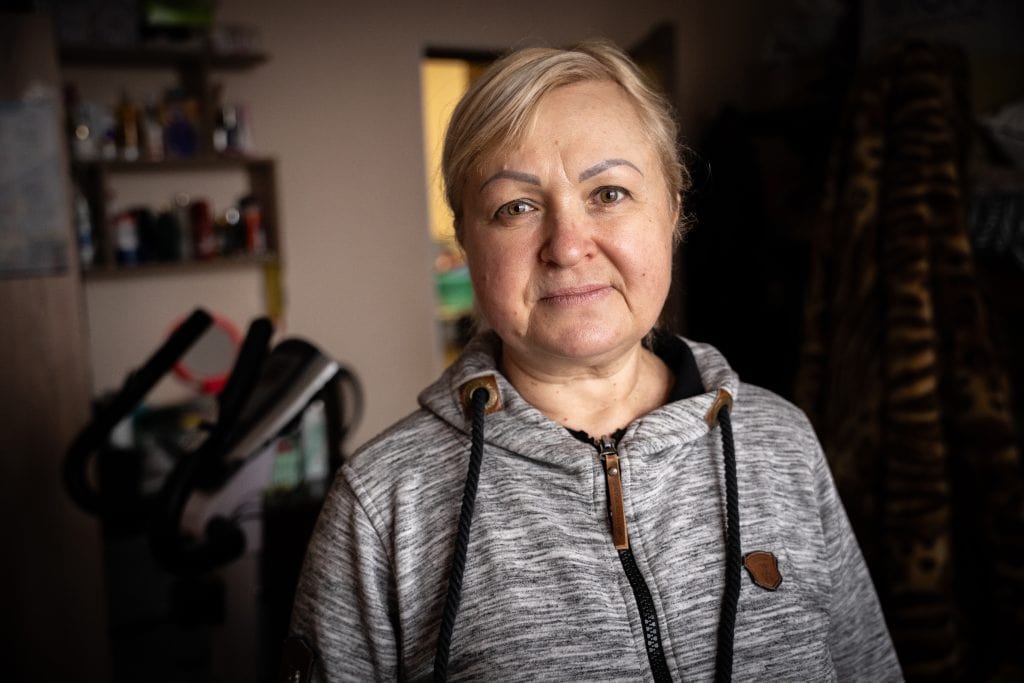
In Vita and her husband’s room, there’s a bookshelf fashioned into a makeshift tool shed. Vita laughs as she shows us the shelves and explains he is the local handyman, supporting the community in whichever way he can, electrician, plumber, builder. He even built their previous home, brick by brick. Sadly, they do not know whether it is still standing:
“We had a talk with our neighbours back home and they said the street was badly damaged, we don’t know if our house exists or was destroyed (…) We want to see it with our own eyes”
Although not the home Vita wishes for, she still highlights how vital a sense of community is in the collective centre, all caring and looking out for one another, UK-Med are a lifeline:
“It’s very important that you provide (healthcare) in this facility because we have elderly people with low mobility and especially in the winter it is very slippery, they wouldn’t have the possibility to see a doctor.”
It’s safer than her family home on the frontline, but there is still a constant threat – to her family and their friends at the centre. Hearing drones flying over every day, few hours of sleep each night, only to get up in the morning and look after her neighbours. Each day hoping that eventually she will be able to return.
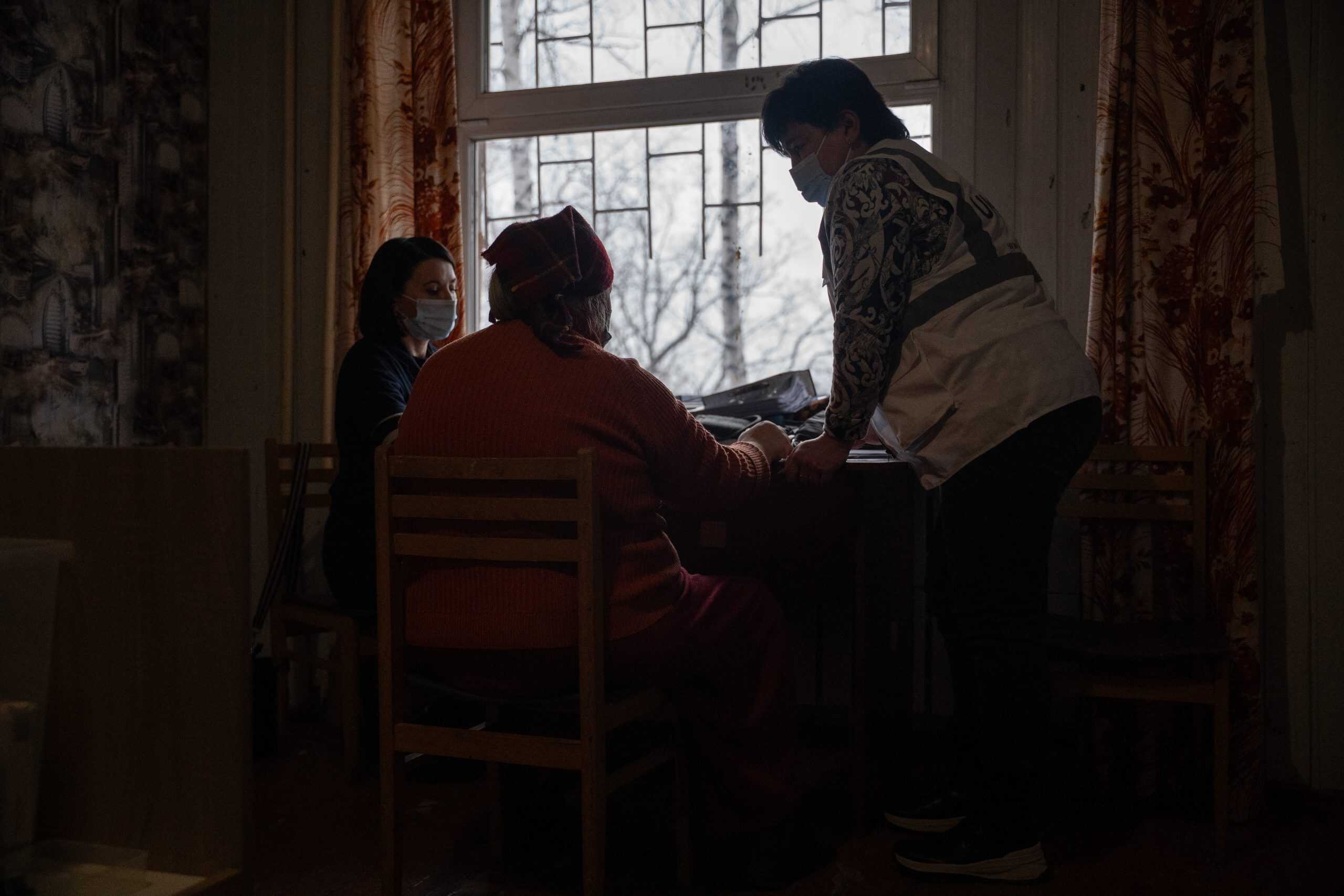
UK-Med staff work along the villages on the frontline, while also supporting these internally displaced communities against the many challenges Winter weather compounds the threat posed by the ongoing conflict.
Without visits from the team, there is nowhere else to receive care.
This is how important it is for us to be there for Vita and her community; how important it is for us to stay with Ukraine.