
‘Caring, to me, is something I have always done. It was not unknown.’
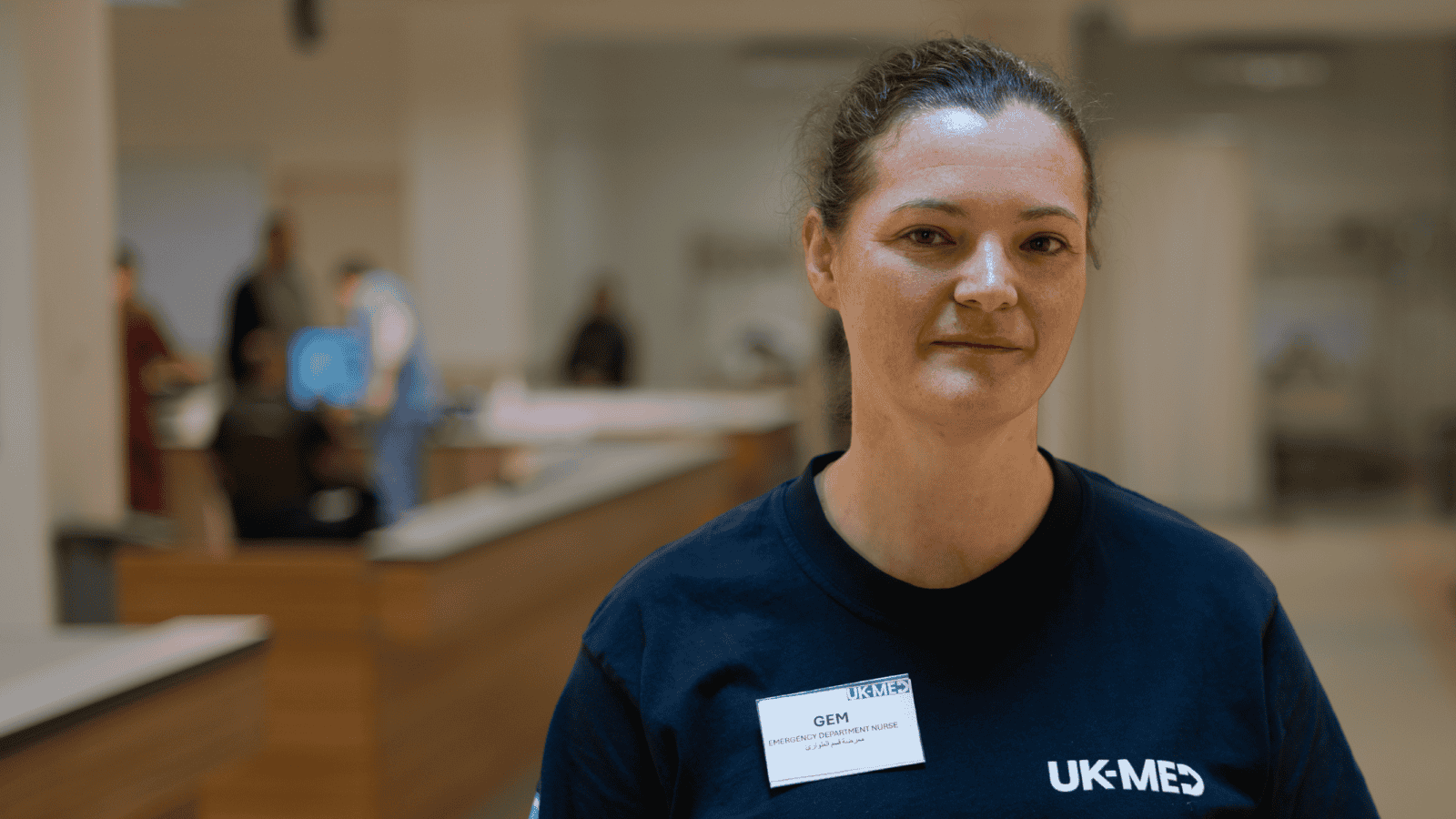
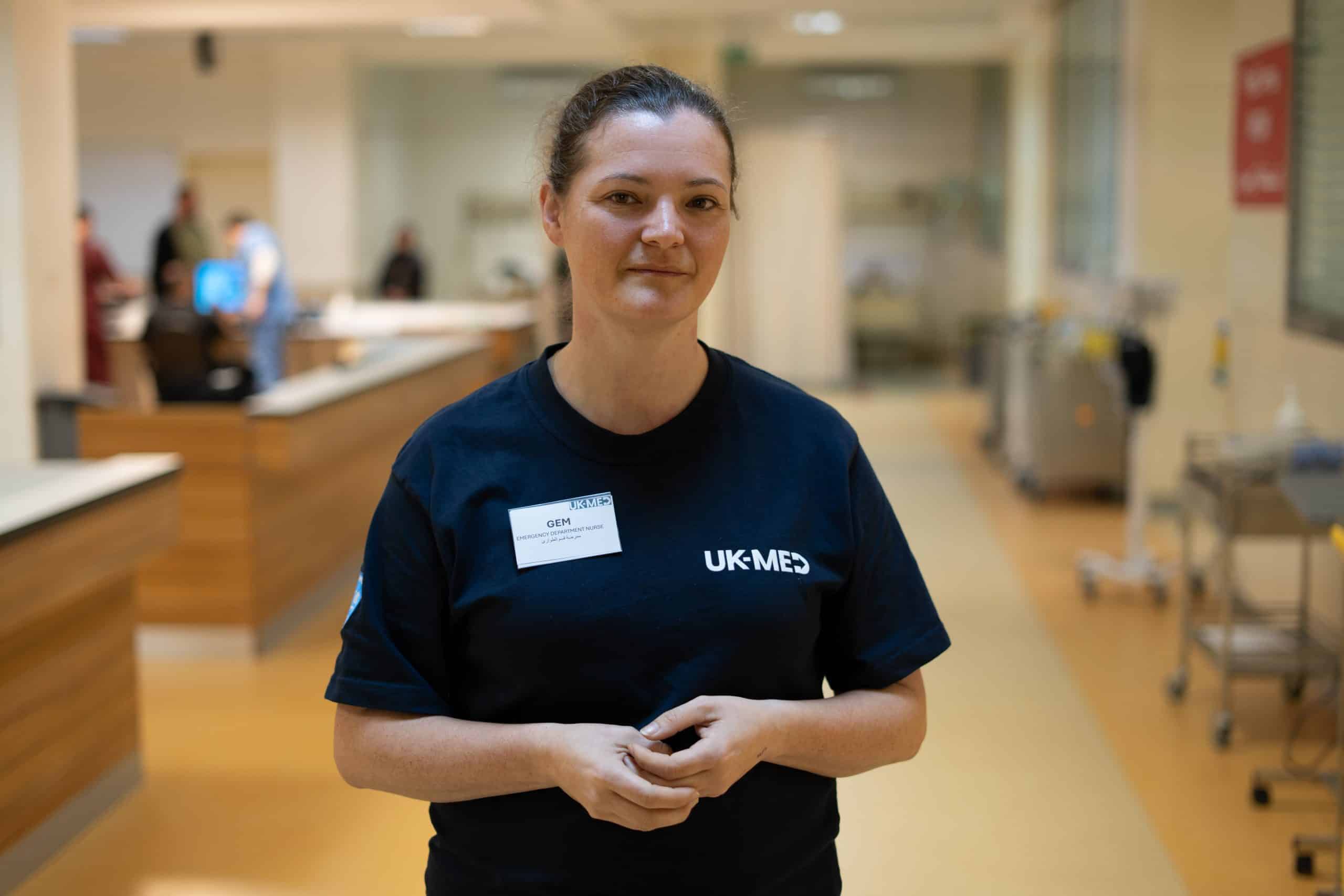
Gemma Aldridge, an NHS nurse from Essex / Hertfordshire, has a remarkable story that places her at the heart of displaced communities — shaped in part by experiences of displacement in her own early life.
Her upbringing was extremely challenging. As the sole carer for her mother and sister, Gemma was often left unsupervised, cooking and cleaning for the household. By seven she had accidentally set the house on fire three times. They were often on the move then, at sixteen, she became homeless and relied on shelters across the UK. These experiences taught huge amounts about resilience and independence and now inform the deep empathy she brings to patient care.
‘You have to understand someone’s background – what some people seek healthcare for really varies. If you are somebody who has always had healthcare accessible and there’s no financial obligations, it is easier to use that service.
But if you have a bad experience or cannot afford it, you are less likely to access that service. So, if you have someone coming in with chest pain, it’s not just a niggle, it’s something that has really concerned them.’
If this wasn’t enough to handle at such a young age, Gemma also witnessed a murder that attracted significant media attention. Press scrutiny followed, alongside letters from the perpetrators sent from inside Holloway Prison. Her safety within shelters was never guaranteed, and she was advised to keep moving. Displacement became a constant.
At sixteen in the UK, young people can legally live independently with limited intervention from social services — for better or worse. For Gemma, this meant disrupted schooling, limited access to further education, and little formal support.
But she reflects ‘it did eventually stop – and it doesn’t stop for everybody.’
Journey to nursing
Gemma’s path into nursing was far from conventional. She began working as a healthcare assistant, where shift work allowed her to take on additional jobs, cover rent, and regain stability.
A matron she worked with recognised her potential and, in Gemma’s words, “took a punt,” encouraging her to apply for nurse training through an apprenticeship scheme. The opportunity allowed her to access higher education while earning a wage — a turning point in her career.
After qualifying, and before joining the UK-Med register, Gemma spent several years working in expedition-based medical care and completed a Master’s degree in Extreme Medicine at the University of Exeter, supported by the World Extreme Medicine collaboration. She has since gained extensive experience with non-governmental organisations, including providing care for refugees in Calais, France, and patients in Ukraine.
Above all, she describes nursing as a profession grounded in consistency and continuity:
‘Nurses look at patient care in its entirety, from medicine, to movement, pain-relief to family support, nurses provide continuity for patients.’

Skill exchange in Lebanon
Gemma is currently part of the UK-Med team in Saida, southern Lebanon, responding to the escalation of hostilities since March 2026. Much of the team’s work focusses on preparedness: ensuring hospitals are equipped and staff are ready for increased demand across emergency and intensive care services. To date, the team has delivered 142 training sessions.
While a ceasefire is partially holding, it does not yet represent a stable political settlement, and attacks continue throughout the country.
‘We don’t know what’s going to happen in the future – if the hospitals get swamped with conflict patients even further south, they will have to move patients up north…anything we can do to prepare for that will support the staff’
She describes the training sessions as helping reduce risk and manage stress should mass casualty incidents occur. But preparedness has its limits.
‘Prepared enough that the stress puts you in a functioning role’, she states.
Due to experience gained working across departments, national nursing staff bring a different way of operating in the current situation. Gemma is keen to emphasise that ‘our way is not always the right way.’
Working internationally exposes her to health conditions less commonly seen in the UK, allowing new skills and clinical understanding to be brought back to the NHS. With climate change influencing patterns of infectious disease across Europe, and the possibility of conflict-related injuries closer to home, this exchange of knowledge is increasingly important.
‘What you learn abroad can also come back to your doorstep’
Gemma’s final piece of advice for nurses looking into humanitarian work –
‘Get yourself clinically capable, make sure you know about the ethics and humanitarian specific knowledge (for example, HEAT) and find what you love and specialise in that. Getting started is the hardest part, but organisations like UK-Med have training pathways and deployment training that really does help.’