

Maintaining morale is an important part of healthcare during times of war. So is continued learning and skills enhancement. In Ukraine, UK-Med nurses Liudmila and Daria are delivering both, providing expert-led training to the nurses in rural hospitals.
The people of Ukraine are in the fourth year of the full-scale invasion. Every day civilians are injured, and every day medics are needed more. With people being forced to flee their homes from the constant violence, hospitals are understaffed, but the demand for care is high.
Senior nurse, Olha Kashsheeva, explains what this means for smaller health facilities on the outskirts of the larger cities, like the one she works at in Zachepylivka.
“The hospital is very small (…) everyone is brought here. Seriously ill patients, sometimes wounded people, sometimes children and palliative patients who need special care”
“We have become much more united (…) the hospital works around the clock.”
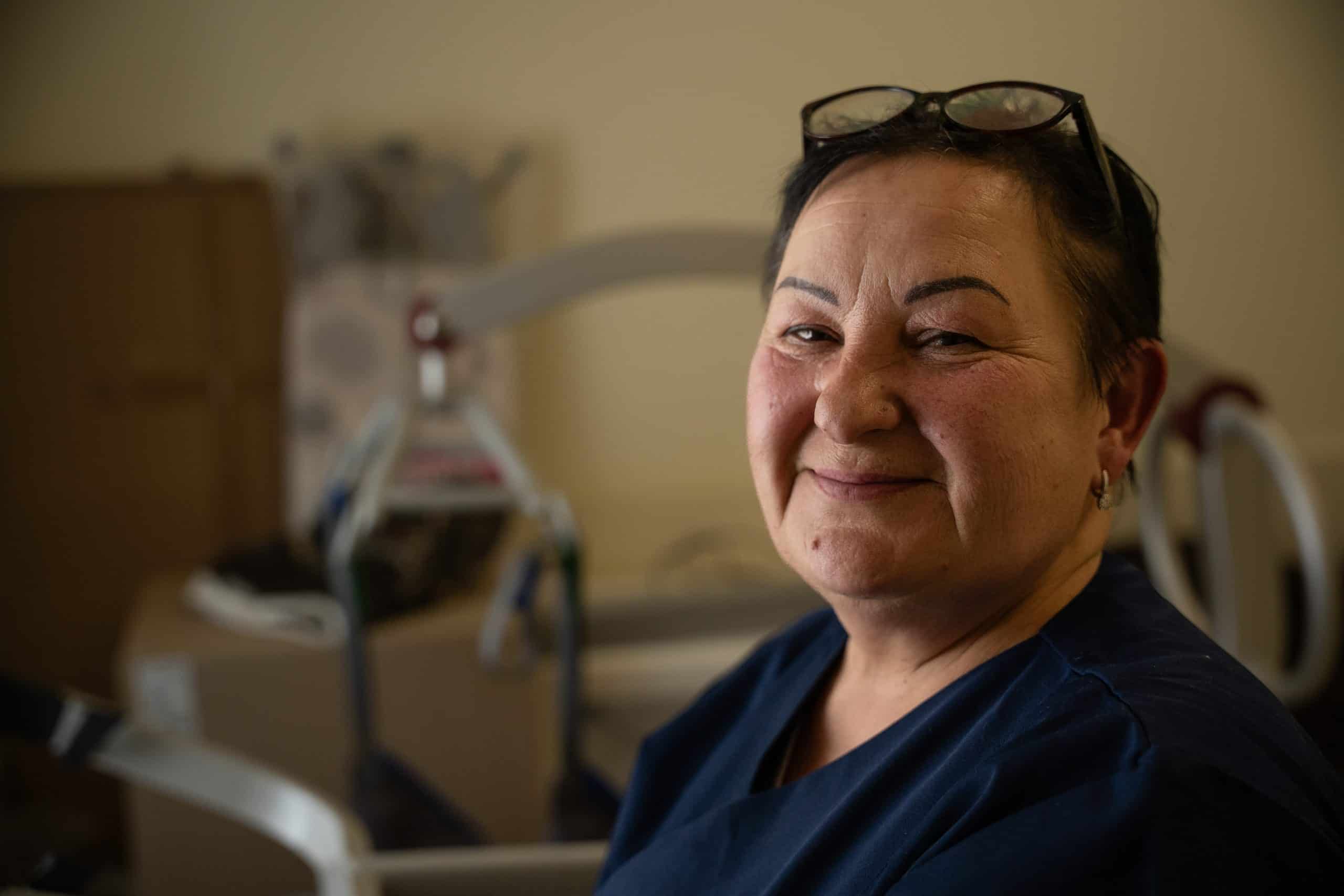
Some rural hospitals are now busier than ever treating patients fleeing from remote villages closer to the frontlines. These hospitals form the lifeblood of these communities, and now see more patients with a range of injuries and illnesses not witnessed prior to this conflict.
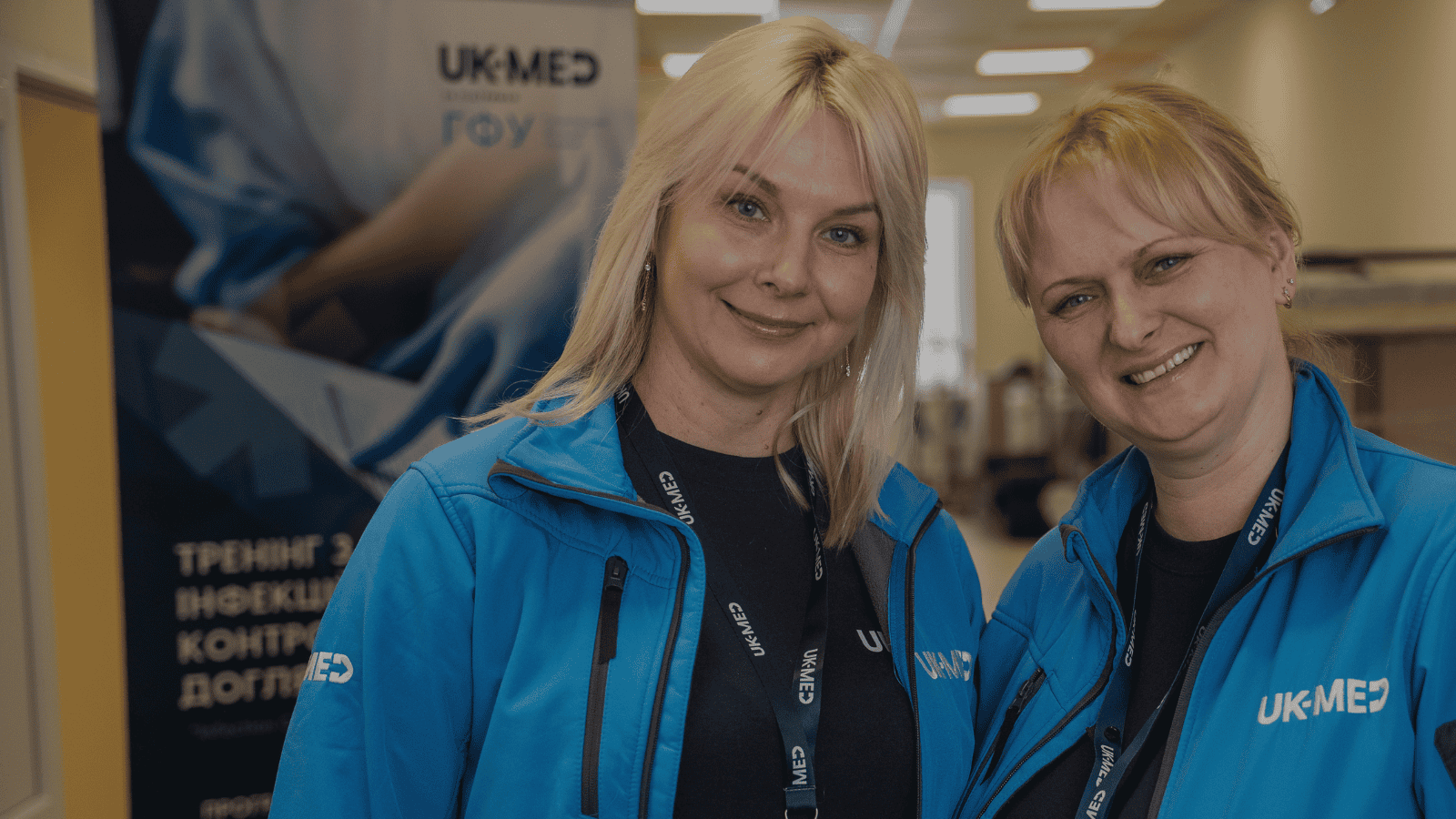
Nurses, Liudmila and Daria, are lifelong friends with twenty years of practical experience. Currently, they are using their skills and knowledge to help train other nurses in these rural communities. Every week they travel to remote hospitals in the East of Ukraine, to support health workers caring for a wide variety of patients. All the while, living under the constant fear of attack.
“We didn’t know that we could apply our knowledge, skills, and experience in a completely different way. UK-Med gave us this opportunity, and we reassessed our roles in healthcare”.
‘The Nursing Duo’, as they have been affectionally described, arrive with broad smiles, ready to take on a day of preparing staff for the changing needs and equipping them with skills to save lives.
Zachepylivka’s hospital corridors are lined with bunk beds, repurposed as a refuge site when air raids sound or when people need a warm space after attacks on the energy infrastructure; an ever-present reminder that hospitals are an integral part of the communities they serve.
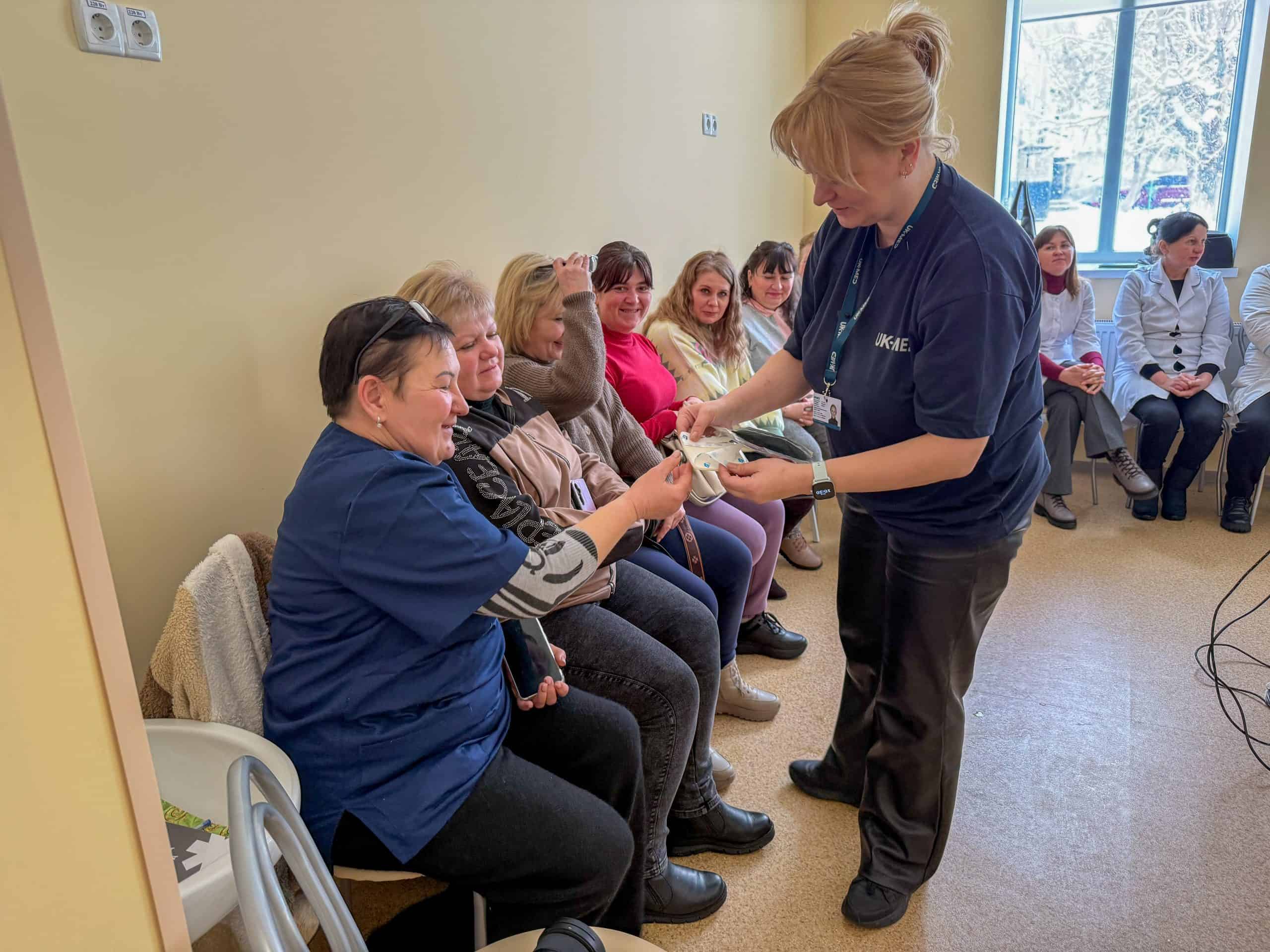
Liudmila and Daria set up their training session in a small room already full of eager participants ready for this chance to learn. Everyone is chatting and laughter echoes down the corridors outside. Hope and resilience resonating through building, despite the cloud of conflict.
Daria explains, “When UK-Med arrives and brings them knowledge, they are very happy about it. It is a significant contribution to Ukraine’s healthcare system.”
The room goes quiet and focuses once the training starts. It is an ‘Infection Prevention Control’ (IPC) session, and the nurses listen eagerly as Liudmila begins explaining the learning outcomes for the session. The participants scribble notes making the most of this opportunity to hone and enhance their skills.
“It’s great that such training courses come to us, to small towns like ours. Especially those that are far from regional centres.” Valentina, a nurse at the hospital, comments.
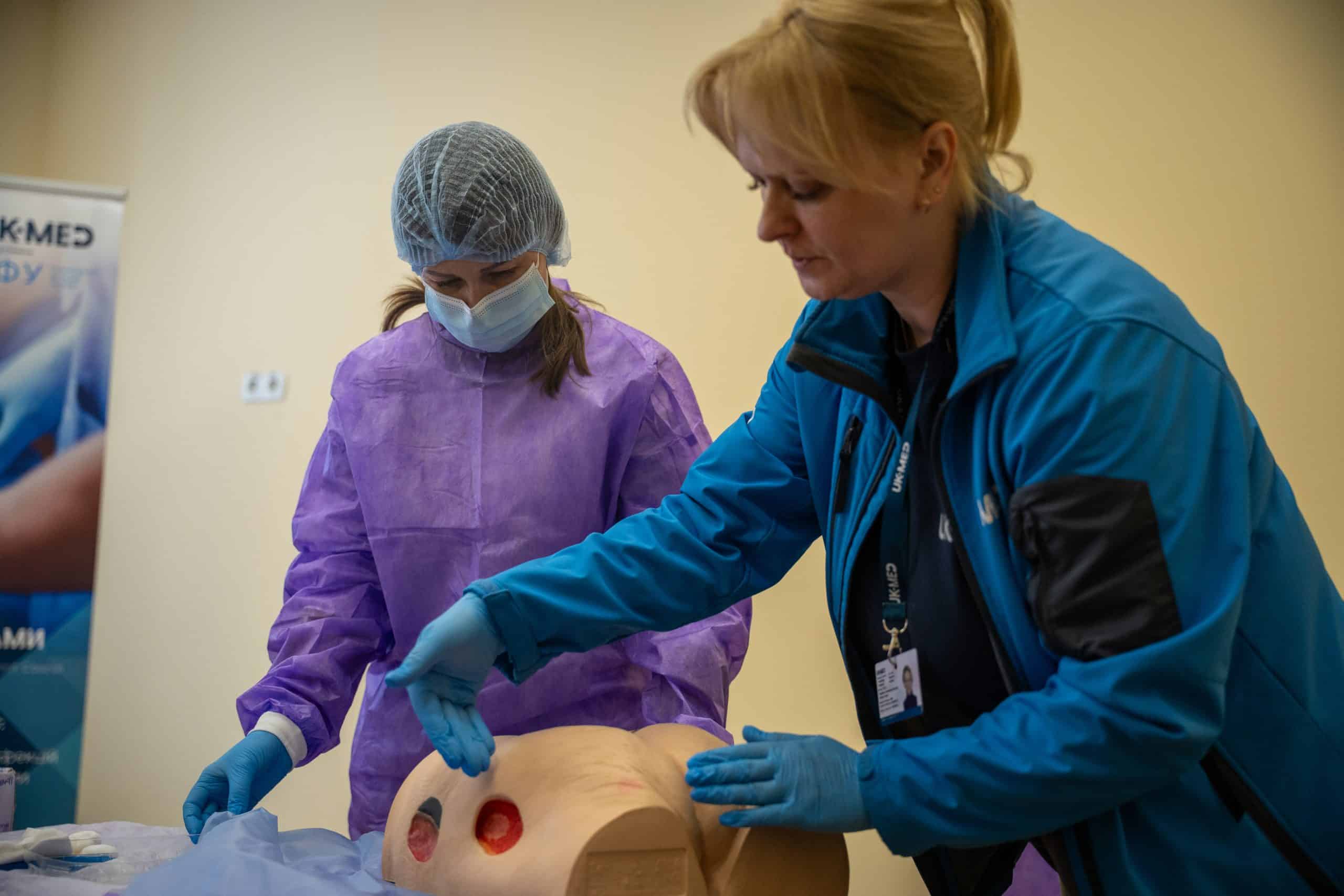
As the practical session begins, the students are keen to participate. They gown up and don the required protective equipment. Their patient is a training doll with a variety of wounds to the thigh area. It is a simulation of the reality they may have to deal with in the future, and a stark reminder of their current context, highlighting the importance of this continued training.
Throughout the session, Liudmila and Daria maintain the difficult balance of being light-hearted and engaging whilst reinforcing the seriousness of what they are teaching, acutely aware of the importance that everyone in that room is equipped with this knowledge.
It is obvious why the pair are so admired by their fellow nurses. They are fun to be around, but they are also acutely aware of what it is to be a lifeline for so many people. Knowing that what they teach today, could save someone’s life tomorrow.
Bringing hope and laughter to a hospital during war is no small feat, but it is vital. Morale, as much as knowledge, is an important part of healthcare in difficult circumstances.
Stay with Ukraine.