
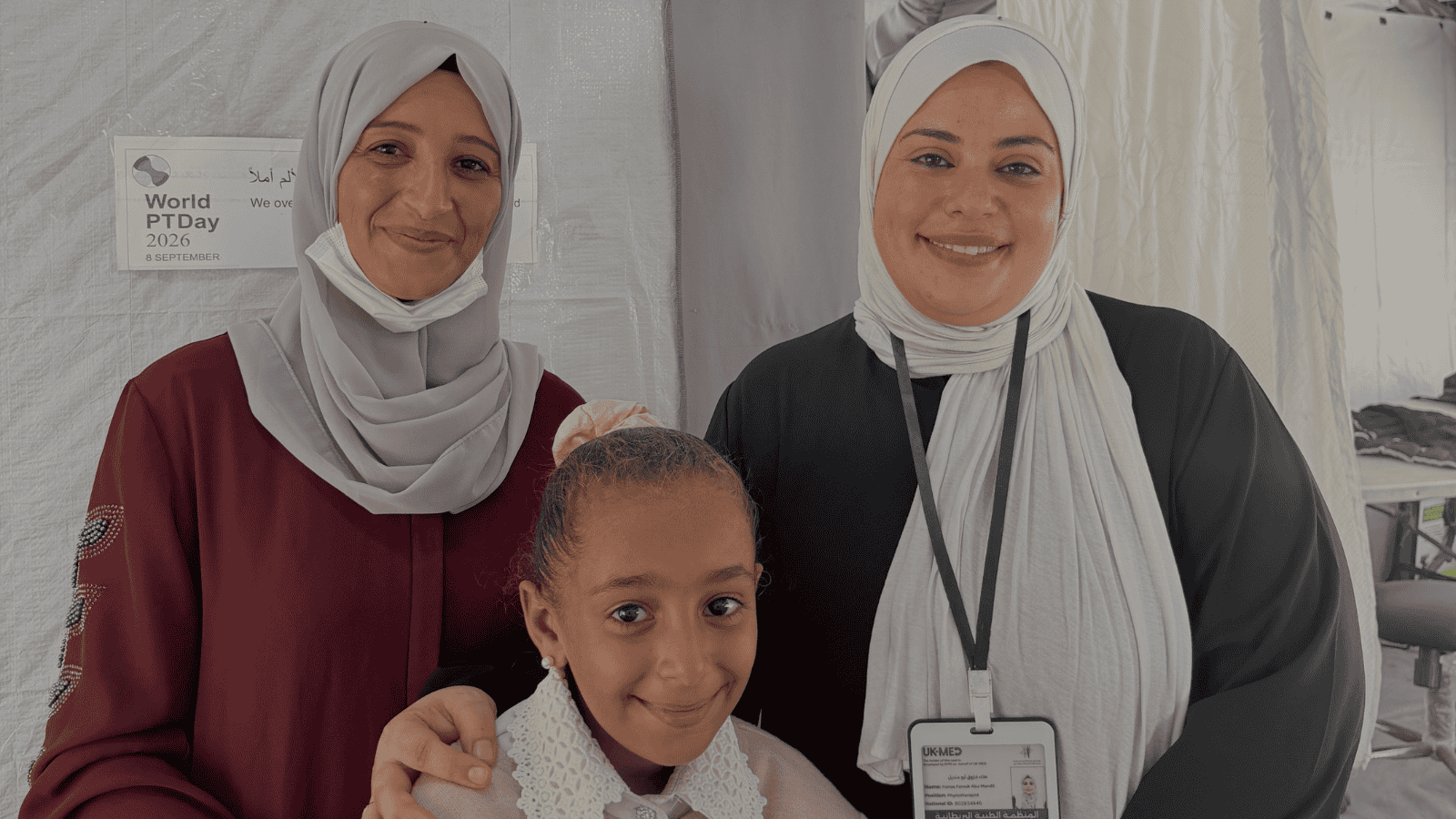
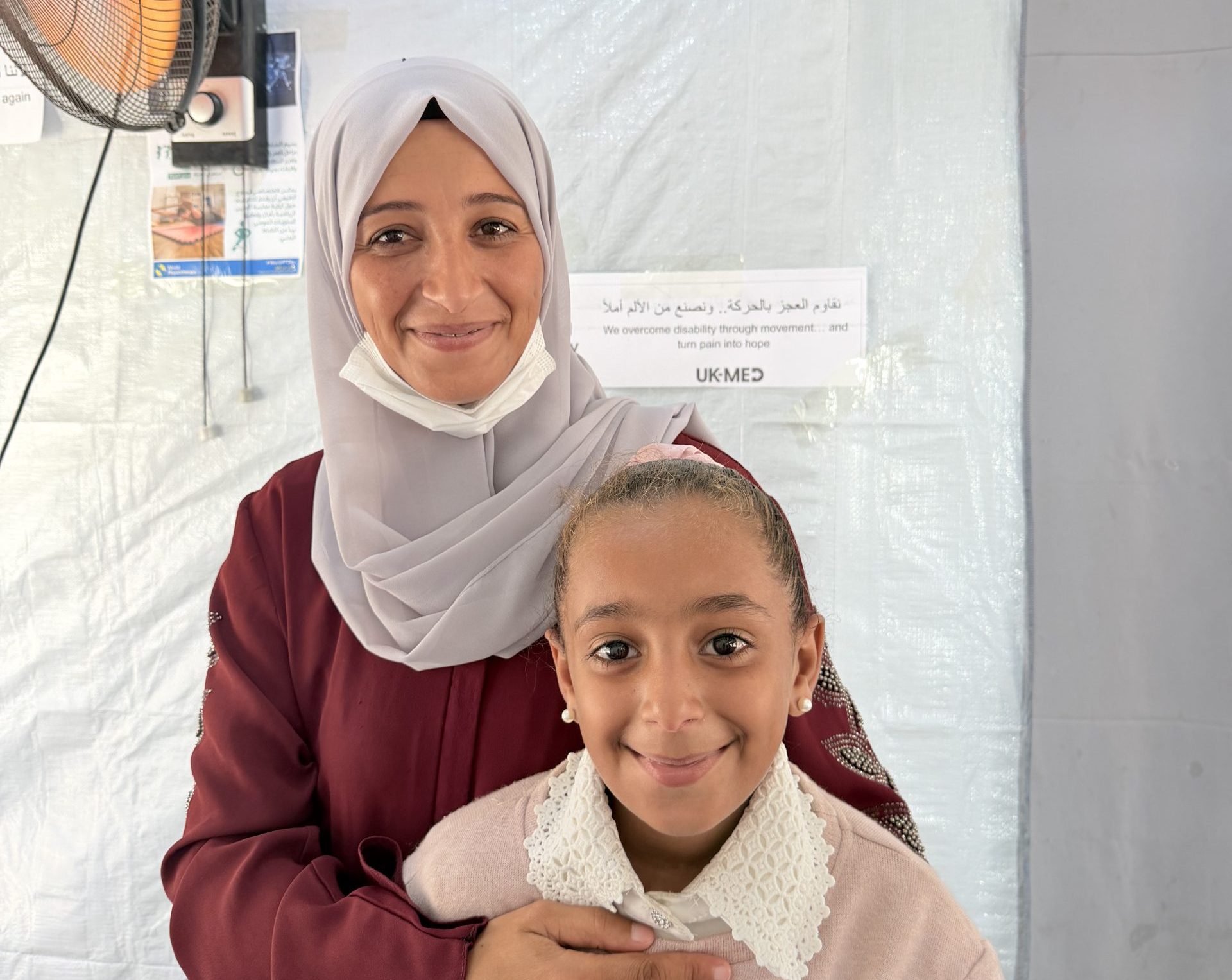
For 38-year-old Wafaa and her nine-year-old daughter, Samira, life changed on 11 September 2024 when they were injured by a strike on the place where they were staying. Three of Wafaa’s siblings were killed in the incident, while Wafaa and Samira were among those injured.
Originally from Gaza, Wafaa had been displaced since 26 October 2023 and is now living near the UK-Med hospital with her son and daughter. Following their injuries, both mother and daughter began a long and challenging journey of treatment and rehabilitation.
A Life-Changing Injury
Wafaa sustained a severe injury to her thigh, resulting in extensive damage to the bone. Medical cement was inserted to support the affected area. Her leg was immobilised in a cast for eight months, during which she was unable to move her leg normally. After the cast was removed, she experienced significant joint stiffness and continued to require rehabilitation.
Wafaa initially received care through ICRC before being referred to UK-Med for physiotherapy and follow-up care. She became one of the early patients to receive rehabilitation services at the hospital and initially attended physiotherapy three times a week.
Her rehabilitation was temporarily paused for six months while the medical cement continued to stabilise with the bone. Once she was able to resume treatment, she returned to regular physiotherapy sessions.
Samira’s Journey
Samira was six years old when she was injured. She sustained serious internal injuries that required the removal of her spleen and parts of her liver and intestines. She also suffered a pelvic fracture and an injury to her right thigh requiring internal fixation.
Following 10 days of care with ICRC, Samira was referred to UK-Med and admitted to the department, where she began receiving daily physiotherapy.
At that time, Samira was unable to walk or move independently. She had spent eight months in a cast and required diapers because of her limited mobility. She initially came to UK-Med in a wheelchair.
After being discharged from the department, Samira continued attending physiotherapy three times a week. With continued rehabilitation, she gradually progressed from using a wheelchair to walking with crutches.
A Mother and Daughter Recovering Together
While Wafaa was attending UK-Med for her own rehabilitation, she also brought Samira with her so that her daughter could receive physiotherapy.
Their journeys became closely connected. They continued returning to the hospital for their rehabilitation sessions, supporting each other throughout a long period of recovery.
With continued physiotherapy and follow-up, both Wafaa and Samira have made significant progress.
The Impact of Rehabilitation
Today, Samira is able to walk independently and normally. Wafaa has also regained movement in her leg and is able to walk again.
Their journey reflects the importance of continued rehabilitation and follow-up care for patients recovering from life-changing injuries.
For Wafaa, physiotherapy has become an important part of her daily life. She says that on days when she does not have a session, she looks forward to returning to the hospital for her next appointment.
“On the days when I do not have a Follow-up Session, I look forward to coming back to the hospital.”